
Vaishali, one of Bihar's most treasured ancient heritage destinations, is a place where history, spirituality, and culture come together. Renowned as an important Buddhist pilgrimage site, Vaishali is closely associated with the life and teachings of Lord Buddha, who visited the region several times. It is also remembered as the birthplace of Lord Mahavira and as one of the world's earliest known republics. With its ancient stupas, Ashokan Pillar, sacred sites, and peaceful surroundings, Vaishali offers visitors a unique journey through India's rich spiritual and historical heritage.

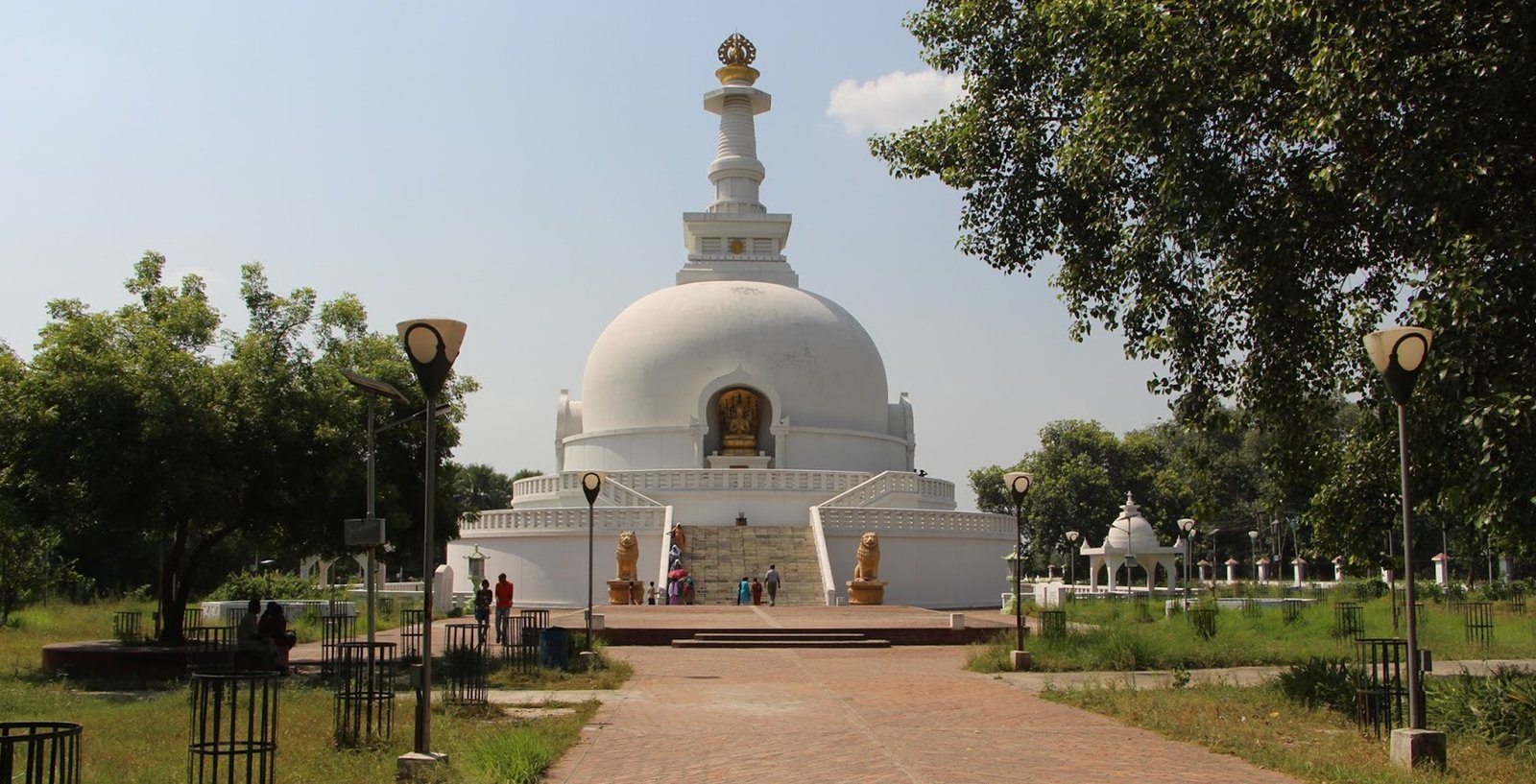
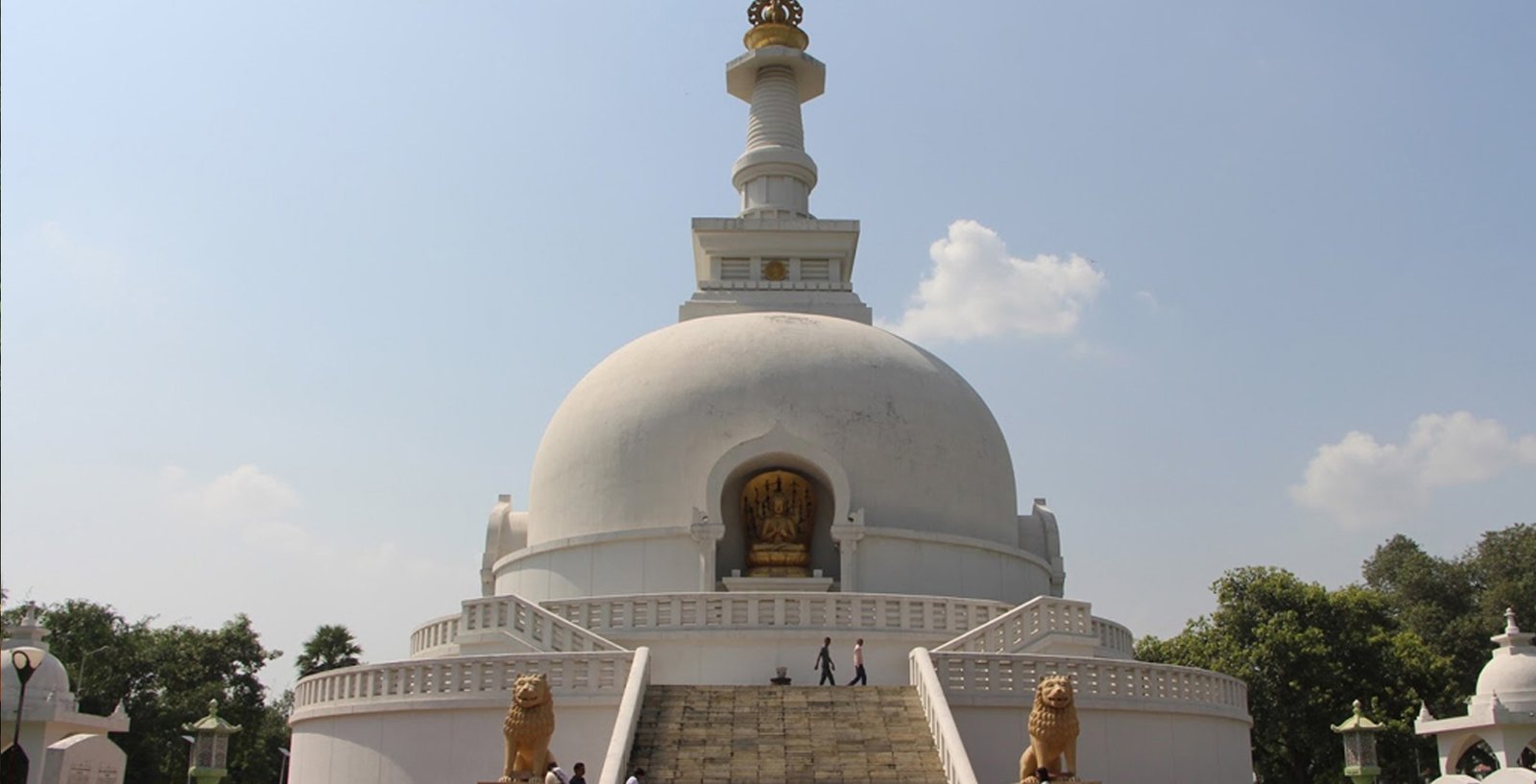
The Vishwa Shanti Stupa, also known as the World Peace Pagoda, is one of the most revered Buddhist monuments in Bihar. Built by the Japanese Buddhist order Nipponzan Myohoji in collaboration with the Rajgir Buddha Vihar Society, the stupa stands as a universal symbol of peace, compassion, and non-violence inspired by the teachings of Lord Buddha.
Constructed in 1969, the gleaming white stupa was established to promote world peace following the vision of Most Venerable Nichidatsu Fujii (Fujii Guruji), who initiated the construction of Peace Pagodas across the world after the devastation of World War II. The Vaishali Stupa is among nearly 80 Peace Pagodas worldwide and enshrines sacred relics of Lord Buddha within its foundation and at the top of the monument.
Built in elegant Japanese architectural style, the stupa rises to a height of approximately 38 meters with a large white dome that radiates serenity.
Distance from the Hotel: 2.6 kilometres
Travel Time: 8 minutes
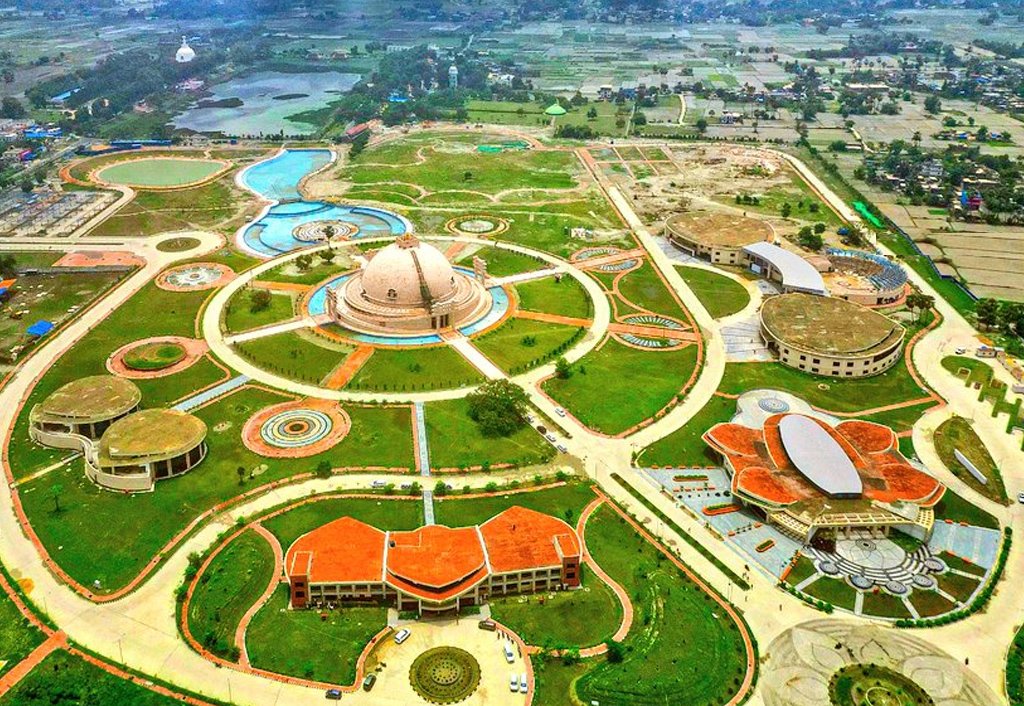
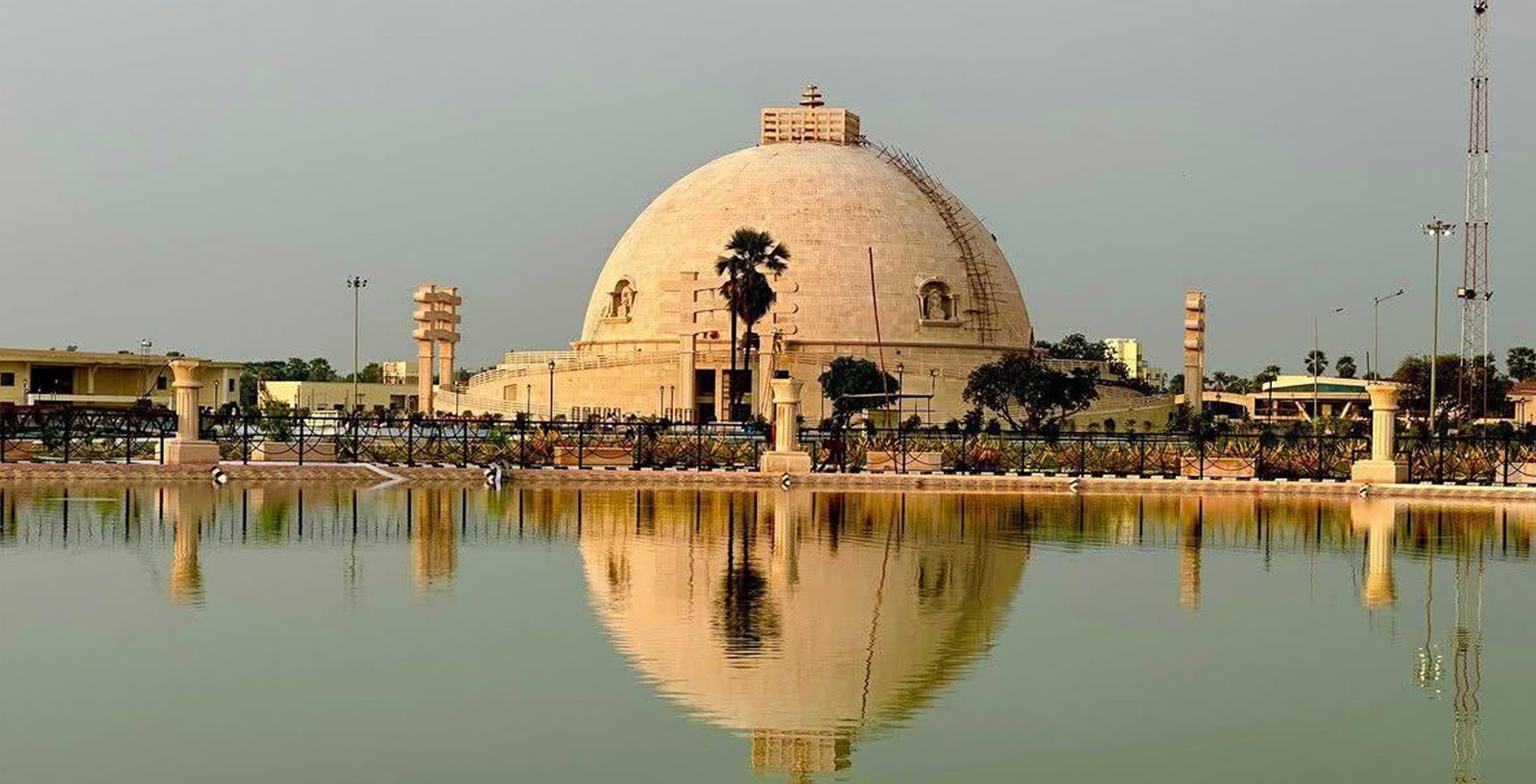
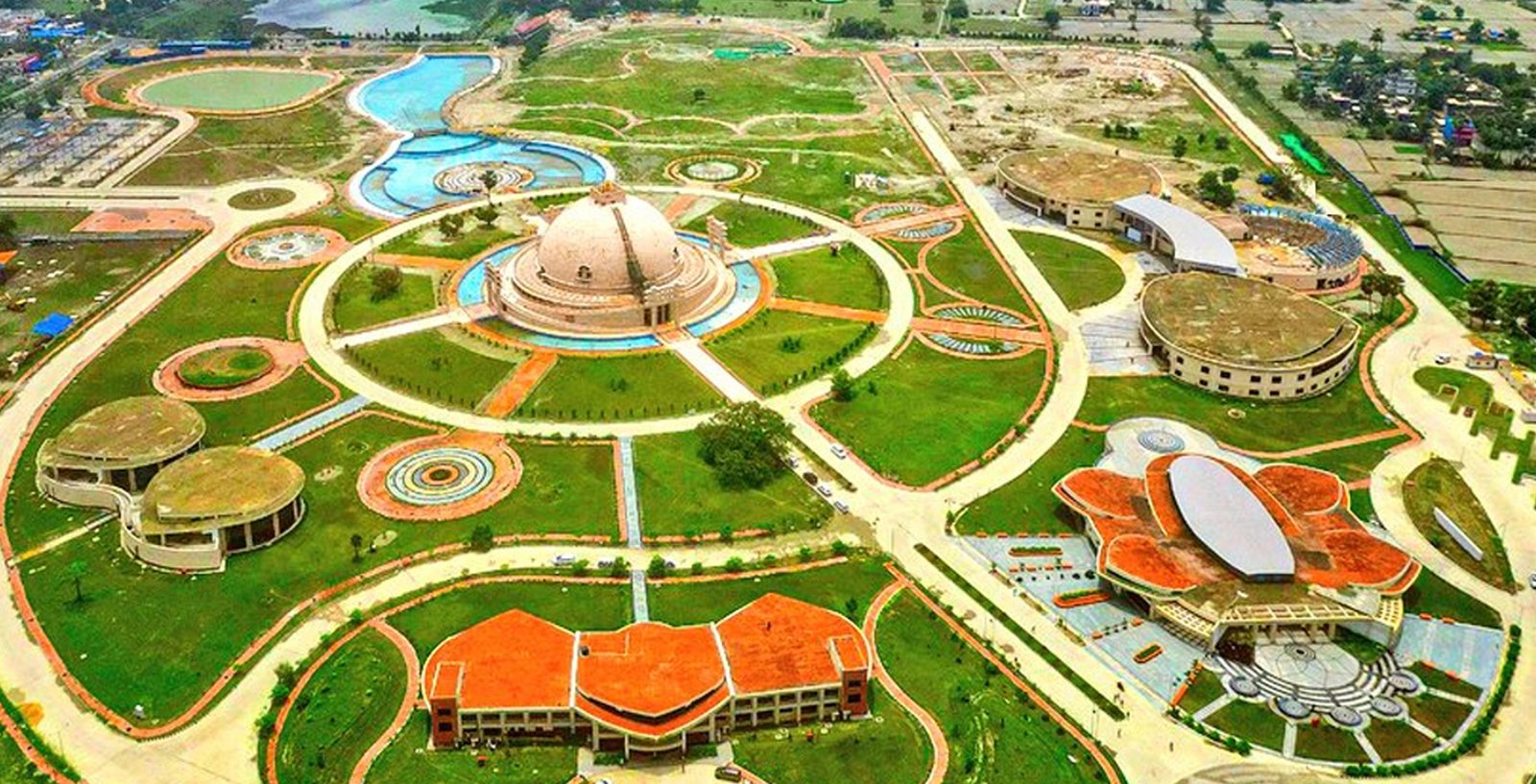
The Buddha Samyak Darshan Museum-cum-Memorial Stupa is one of India's newest and most significant Buddhist heritage destinations. Located in the ancient city of Vaishali, the museum was established to preserve and showcase the rich Buddhist legacy of the region, with special emphasis on the sacred relics of Lord Buddha discovered during archaeological excavations in Vaishali. The museum complex was officially inaugurated on 29 July 2025 by the Government of Bihar.
Spread across 72 acres, the complex features a magnificent 35-meter-high Memorial Stupa built from over 42,000 blocks of pink sandstone sourced from Rajasthan. The first floor houses the revered relic casket of Lord Buddha, while the ground floor contains a serene meditation hall with a statue of Buddha in the Dhyana Mudra.
The museum displays an impressive collection of Buddhist sculptures, archaeological discoveries, manuscripts, and artworks representing various schools of Buddhist art, including Gandhara, Mathura, Sarnath, Amaravati, and Ajanta traditions.
Distance from the Hotel: 3.4 kilometres
Travel Time: 9 minutes
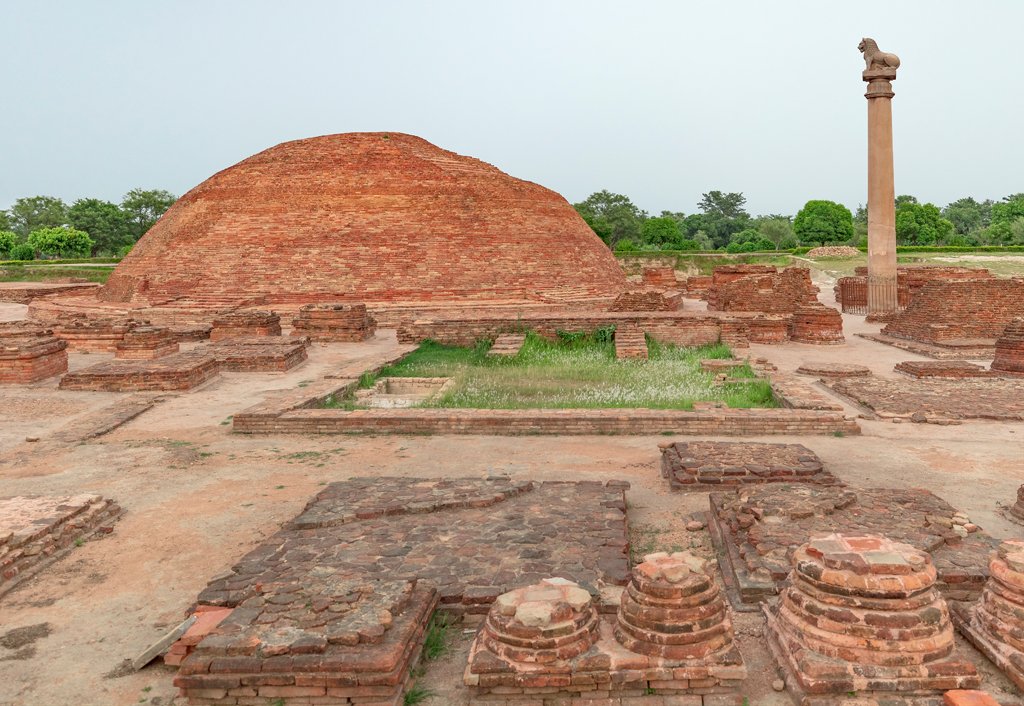
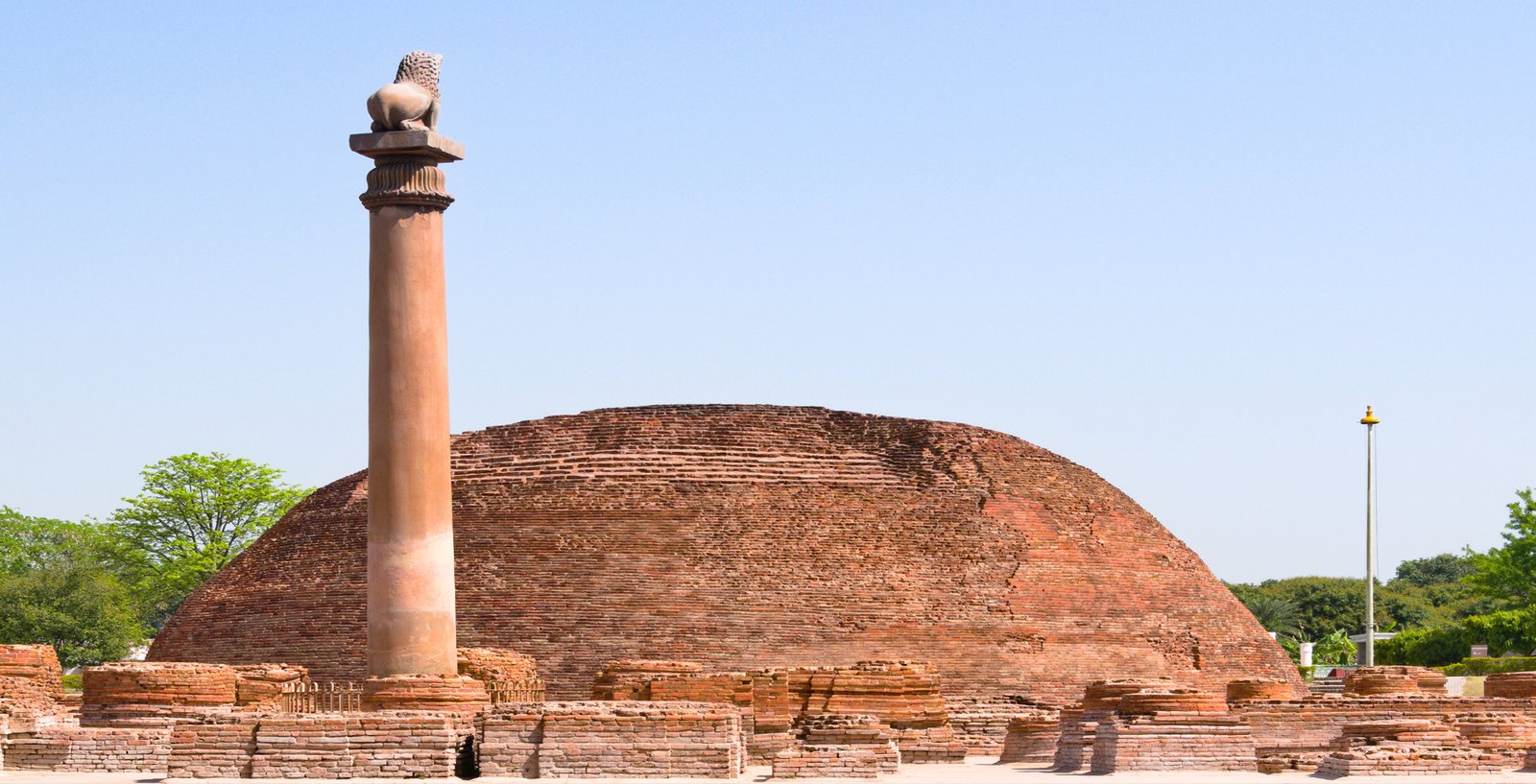
The Ashoka Pillar, Vaishali is one of the most significant Buddhist monuments in India. Located at Kolhua near Vaishali in Bihar, this magnificent pillar was erected by Emperor Ashoka in the 3rd century BCE to commemorate Lord Buddha's visit to Vaishali and to promote the teachings of Buddhism.
Carved from a single block of polished red sandstone (Chunar sandstone), the pillar stands approximately 18.3 meters (60 feet) tall. Unlike the famous four-lion capital at Sarnath, the Vaishali Ashoka Pillar is crowned with a single seated lion facing north, symbolizing courage, strength, and the direction of Buddha's final journey toward Kushinagar.
The pillar stands beside the remains of an ancient Buddhist monastery and a sacred pond known as Ramkund. It marks the place where Lord Buddha delivered his last sermon before departing for Kushinagar and announced his approaching Mahaparinirvana. Vaishali is also closely associated with the Second Buddhist Council, held approximately a century after the Buddha's passing.
Distance from the Hotel: 5 kilometres
Travel Time: 9 minutes
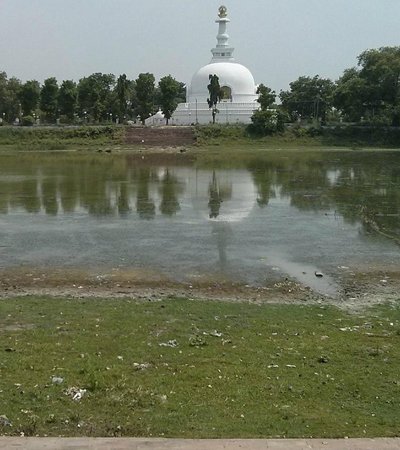
The Abhishek Pushkarini is an ancient sacred water tank located in Vaishali, Bihar. It holds immense historical and cultural significance as the coronation tank of the Licchavi Republic, one of the world's earliest known republics.
The name "Abhishek Pushkarini" means "Sacred Coronation Tank." According to historical tradition, the elected rulers and representatives of the Licchavi Republic took a ceremonial bath in its holy waters before assuming office. This ritual symbolized purity, responsibility, and their commitment to serving the people with justice and integrity.
Beyond its political importance, the Pushkarini is closely associated with Vaishali's rich Buddhist and Jain heritage. The sacred tank lies near several important archaeological remains, including the Ashoka Pillar, ancient monasteries, and stupas, making it an integral part of the historic landscape visited by pilgrims and history enthusiasts.
Distance from the Hotel: 500 meters
Travel Time: 2 minutes
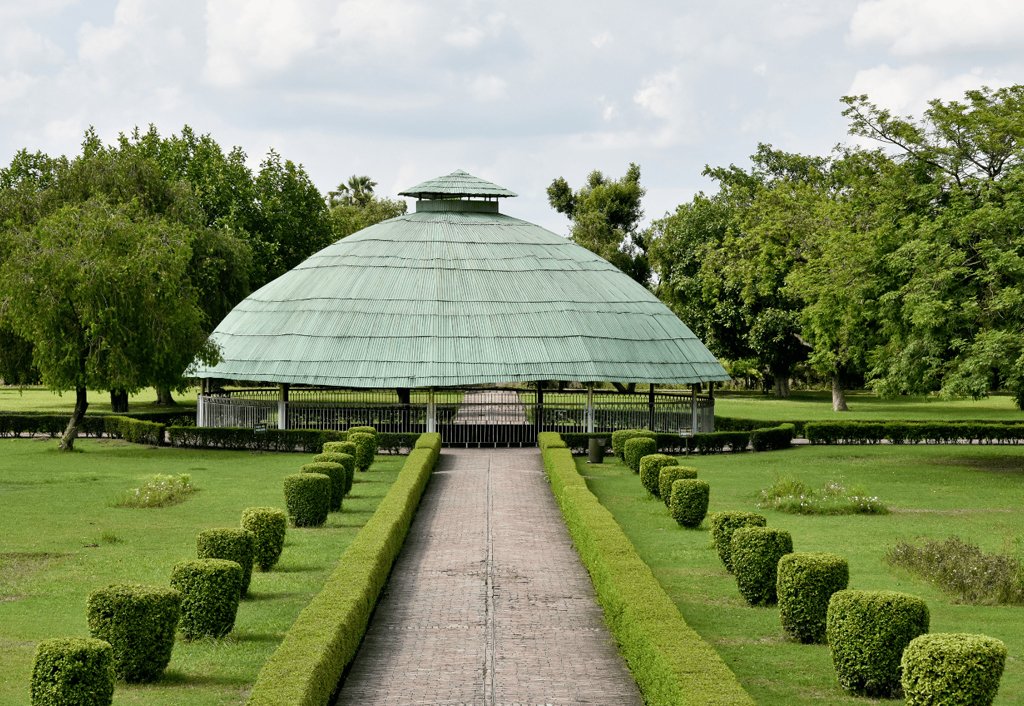
The Buddha's Relic Stupa is one of the oldest and most sacred Buddhist monuments in the world. Located in the ancient city of Vaishali, Bihar, the stupa was built by the Licchavi Republic to enshrine a portion of the sacred relics (ashes) of Lord Buddha after his Mahaparinirvana at Kushinagar in the 5th century BCE.
According to the Mahaparinibbana Sutta, Lord Buddha's cremation relics were divided into eight portions among different kingdoms and republics. The Licchavis of Vaishali received one share and constructed this stupa to preserve and venerate the sacred relics. It is therefore regarded as one of the original eight relic stupas associated directly with the Buddha.
Archaeological excavations conducted by the Archaeological Survey of India uncovered a relic casket containing ash, beads, a conch shell, and a thin gold leaf, confirming the site's immense historical and religious significance. These discoveries have made the Buddha's Relic Stupa one of the most important archaeological sites in the Buddhist world.
Distance from the Hotel: 950 meters
Travel Time: 3 minutes

Raja Vishal ka Garh, located in Vaishali, Bihar, is one of the most significant ancient archaeological sites in the region. It is traditionally associated with the Vajji and Lichchhavi confederacy, an ancient republican system that flourished in Vaishali. The site consists of a large fortified mound surrounded by a wide moat.
According to historical traditions, Raja Vishal ka Garh is believed to have been an ancient assembly or meeting place, where representatives gathered to discuss important matters of administration and governance. This makes the site particularly important in understanding the early development of republican traditions in ancient India.
Today, the impressive ruins provide visitors with a glimpse into Vaishali's rich political, cultural, and archaeological heritage. Together with nearby attractions such as the Ashokan Pillar at Kolhua and other Buddhist and Jain sites, Raja Vishal ka Garh makes Vaishali an important destination for travellers interested in India's ancient history and civilization.
Distance from the Hotel: 500 meters
Travel Time: 2 minutes

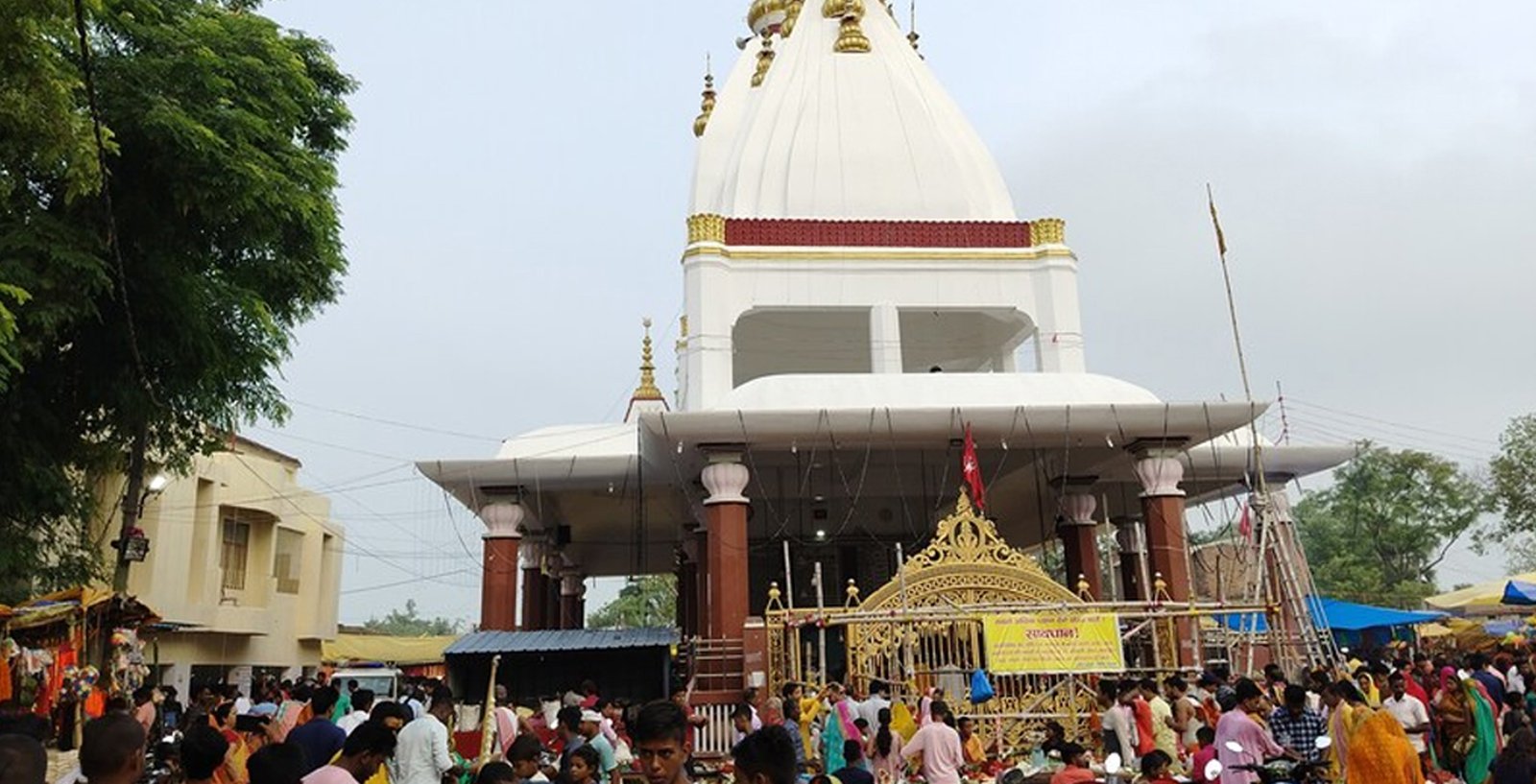
Chaumukhi Mahadev Temple, located in Vaishali, Bihar, is a revered Hindu shrine dedicated to Lord Shiva. The temple is known for its distinctive four-faced (Chaumukhi) representation of Lord Shiva, making it an important place of religious and cultural significance in the region. Devotees visit the temple throughout the year to offer prayers and seek the blessings of Lord Shiva.
The four-faced form of Shiva is considered a unique representation, symbolizing the divine presence of the deity in multiple directions. The temple reflects the deep-rooted Shaivite traditions of Bihar and forms part of the spiritual heritage of Vaishali, an area already renowned for its ancient Buddhist, Jain, and Hindu connections.
For visitors, Chaumukhi Mahadev offers a peaceful and devotional experience while exploring the historic landscape of Vaishali. A visit to the temple can be combined with other nearby attractions, making it a meaningful stop for travellers interested in religion, history, culture, and the spiritual heritage of Bihar.
Distance from the Hotel: 5.5 kilometres
Travel Time: 15 minutes

Lord Mahavira's Birthplace, located in the Vaishali region of Bihar, is an important pilgrimage site for followers of Jainism. Lord Mahavira, the 24th and last Tirthankara of Jain tradition, is traditionally believed to have been born at Kundagrama, near ancient Vaishali, around the 6th century BCE. The site holds great spiritual significance for devotees and visitors interested in India's ancient religious heritage.
According to Jain tradition, Mahavira was born into the Ikshvaku lineage and spent his early years in the Vaishali region. His teachings emphasized non-violence (Ahimsa), truth, self-discipline, and detachment, principles that became central to Jain philosophy. The Vaishali area is closely connected with important events from his early life and spiritual journey.
Today, the birthplace area is visited by Jain pilgrims and tourists from India and around the world. The peaceful surroundings, religious monuments, and connection with ancient Vaishali make it an important destination for understanding the life and teachings of Lord Mahavira and the rich spiritual history of Bihar.
Distance from the Hotel: 20.1 kilometres
Travel Time: 1 hour and 8 minutes